
The Sentinel Weekly: We’ll always have JEF
Multilateral forces are more realistic than an EU army

It’s difficult to imagine a less militaristic organisation than the EU. Conceived as a peace project after the Second World War, the 27-member club is the cultural opposite of an army.
Soldiers subordinate their own comfort and safety to their commander’s needs, and follow unpopular orders without hesitation; Brussels runs on consensus hashed out through endless compromises. The EU’s motto is “United in Diversity”; armies may have diverse recruits but they mould them into uniform soldiers. The only thing military about the EU is its love of acronyms.
In Brussels, getting lost in translation is a staple of dinner party jokes. On the battlefield, it can be fatal. During the Korean War, a British brigadier told his American commander that things were “a bit sticky” for his formation. Through a stiff upper lip, that means things were very bad indeed. But the American thought it meant only mild difficulty, and sent his reinforcements elsewhere.
As calls grow for Europe to develop joint command structures independent of the US, that should give leaders pause. An ‘EU army’ may eventually take shape but the constitutional arrangements would probably take decades to put into place. With Vladimir Putin stalemated in Ukraine and unable to wind down Russia’s war economy, conflict could come to EU shores long before then.
Multilateral arrangements between European countries offer a more realistic model. They have the added benefit of allowing highly capable non-EU countries like the UK and Norway – perhaps even Canada – to participate as full members; and also for EU countries to opt out without vetoing the whole enterprise.
Moreover, such structures allow forces to be assembled with limited objectives, rather than needing to come up with a full European military doctrine. It’s easier to get half a dozen countries to cooperate on Arctic warfare or long-range air defence than to get 27 to align on their entire strategy (and then try to shoehorn the UK in after the fact).
Enter JEF
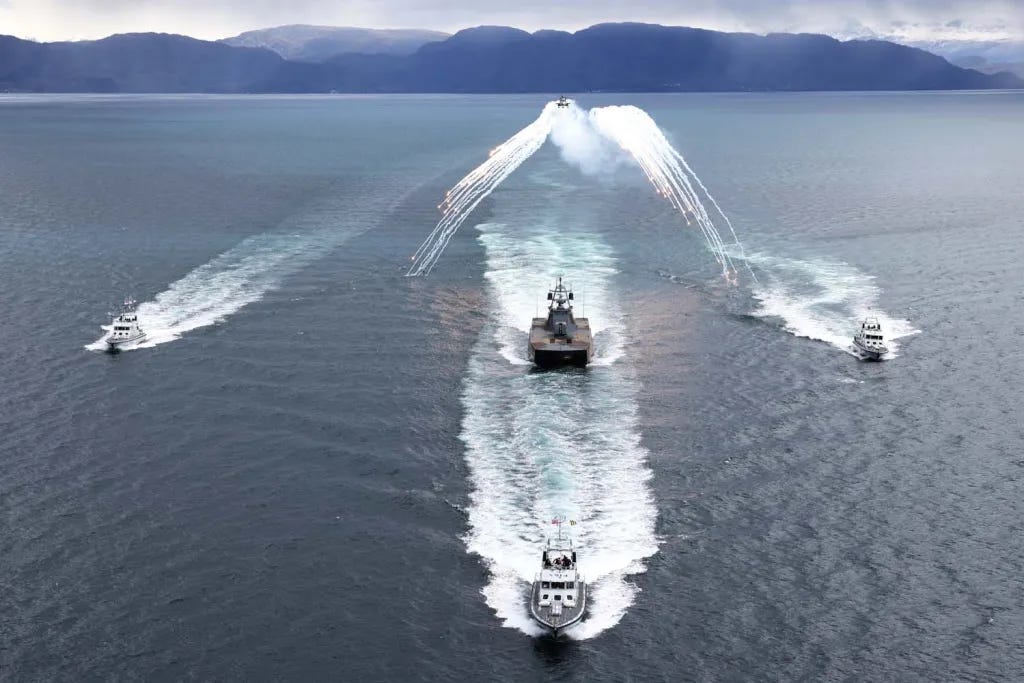
The Joint Expeditionary Force (JEF) offers a model. Established in 2014, it groups ten northern European countries under a single command: Denmark, Estonia, Finland, Iceland, Latvia, Lithuania, the Netherlands, Norway, Sweden, and the UK which leads the group. All its members are NATO countries but that’s not a requirement: Finland and Sweden joined the JEF in 2017, before they joined NATO.
With a force of about 10,000 well equipped soldiers, JEF is designed to deploy on NATO missions but also independently. Though limited in scope, it is Europe’s only functional cross-border headquarters without Americans in the command chain, and the only joint command that could deploy immediately if NATO were to collapse.
In recent years the JEF has deployed forces to the Baltic Sea to protect undersea cables, and conducted joint air patrol exercises alongside US and Canadian forces. Last year it conducted Tarassis, a major series of combined-arms exercises involving all its member countries over a six-week period.
The JEF has also become more focused on the immediate threats to its members. Initially conceived with a mandate to strike as far afield as the Middle East – reflecting UK and NATO postures at the time – it now identifies its core “area of interest” as the High North, North Atlantic and Baltic Sea region.
Besides deterring a general war, joint commands are also important to counter growing Russian hybrid attacks, many of which occur in neutral territory such as the international waters of the Baltic Sea and North Sea. As the cost of countering such threats grows, joint commands offer a burden-sharing mechanism that is fair as well as efficient. Other capabilities such as airspace policing and cybersecurity response would similarly benefit from joint command structures in the event that NATO fails.
A major prong of Russian hybrid aggression is propaganda that seeks to turn European societies against themselves and each other. Here too, the JEF says it has a role – though perhaps out of necessity it doesn’t name its activities. “It is of vital importance to win the battle of the narrative and the JEF has an ability to manoeuvre in this area where others cannot,” its website states.
Deterrence beyond Narva
Russian aggression will remain a near-certainty for at least as long as Putin sits in the Kremlin, but there’s no consensus on what form it might take. The ‘Narva scenario’, whereby Russian troops seize a small piece of Baltic territory and dare NATO to counterattack, is now widely known in defence circles but many in the Baltics resent the implication that they couldn’t prevent it from happening.
Edward Lucas, who has covered the Baltics since the fall of the Soviet Union, described the Narva scenario as “scaremongering” this week at the launch of the Baltic International Security Centre, a new think tank. The three Baltic states have learned the lesson of Crimea in 2014 and have developed tactics to counter the ‘little green men’; and the concept of a ‘Russian-speaking community’ ready to assist the invaders is a mere Kremlin propaganda line, he said.
An escalation in hybrid attacks is a much more realistic scenario, he said, and the Baltic states have come up with the best response. Rather than deny or downplay them, as many other European countries do, Baltic countries win the support of their population by naming hostile Russian activity and taking it seriously.
Lucas identified the JEF, which includes the three Baltic countries, as a crucial pillar of their shared security in a post-American Europe, allowing them to be quickly reinforced by allies but also to share their experience from the front lines of the hybrid war. “Europe should do more of this,” he said.
In the news
Hundreds of Spanish business executives and lawyers took part in a government consultation aiming to overhaul export rules for military and dual-use equipment.
Czechia will probably miss its target of spending 2% of GDP on defence this year, the prime minister told the Financial Times, blaming a budget shortfall on the previous government.
Poland has allocated more than €28 billion of its SAFE funds to contracts for local firms, with a large chunk going towards military vehicles and 155mm ammunition.
France has banned Israel from officially participating in a major defence trade show later this month and placed tight restrictions on its companies.
Rheinmetall has won contracts worth €5.7 billion under Romania’s portion of the EU’s SAFE program, and says will invest hundreds of millions of euros in local production.
Further reading
Germany’s new defence strategy will fail to deliver the equipment the armed forced need and to build the alliances necessary to guarantee its security, Guntram Wolff wrote in a scathing analysis for the Bruegel think tank.
Shashank Joshi has written an essay on the changing face of modern warfare to mark the end of his eight-year tenure as the Economist’s defence editor.
The Sentinel is a few weeks away from launch, when we will move on to our own platform and greatly expand our output. If you’re subscriber here, you’ll receive a weekly editor’s letter and will have access to a limited amount of content in front of our paywall.
If you’d like to submit an op-ed to be published after launch, or are interested in a full subscription when they become available, please email sam@thesentinel.eu.