
The Sentinel Weekly: Rise of the machines
Plus EU nuclear deterrence, UK SAFE talks, air-to-air missiles and more

The use of artificial intelligence in warfare has long stoked our imaginations and our fears. As far back as 1957, Isaac Asimov conjectured in The Naked Sun that a “positronic brain” could be deceived into killing humans at scale even when its training prohibited it. Three decades later, the Terminator franchise imagined a superintelligent AI that sought to exterminate humanity.
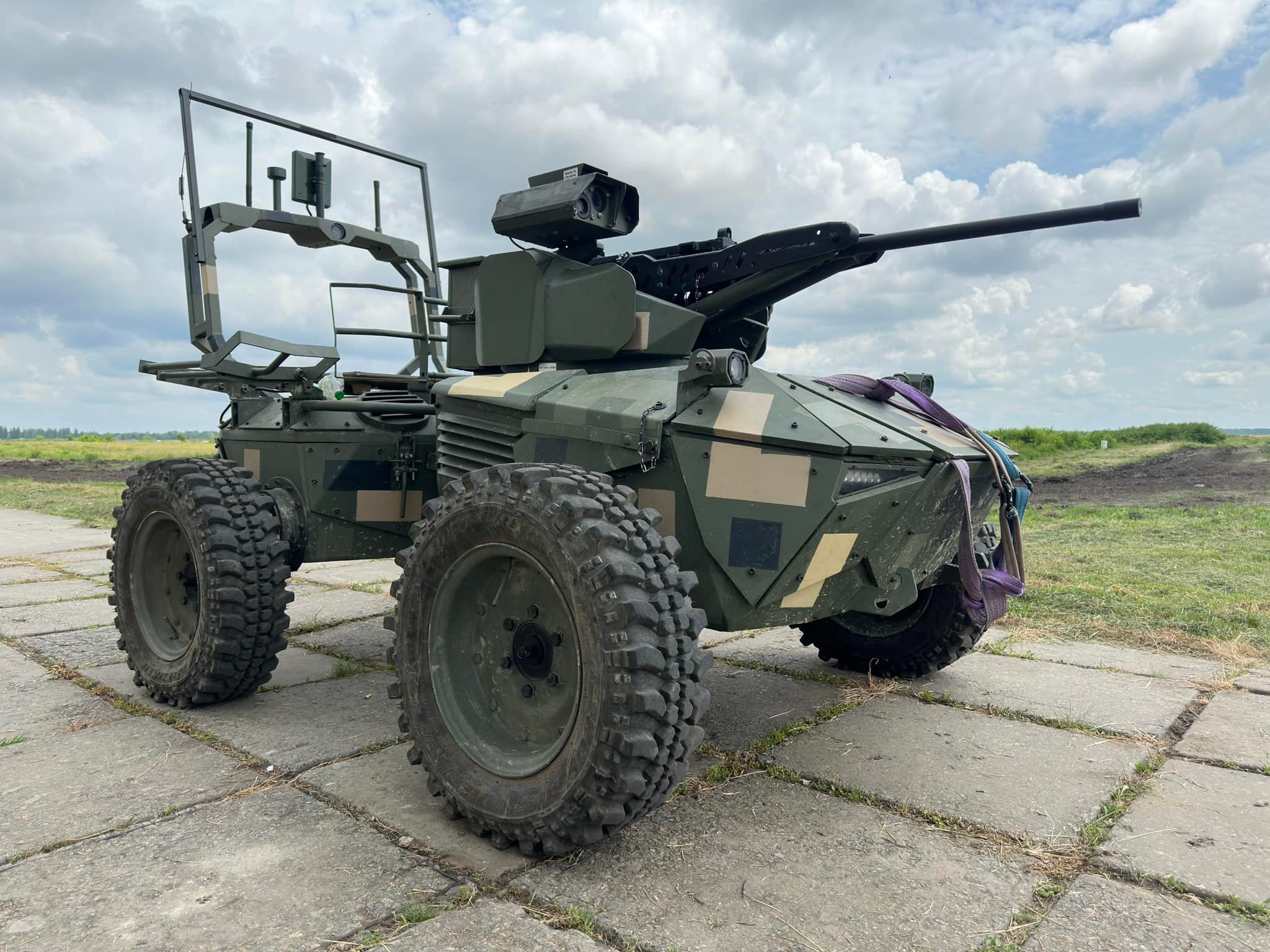
Today, as advanced language models replicate human reasoning to an uncanny degree, attention has turned to their use on the battlefield. And while we’re no closer to seeing time-travelling Austrian bodybuilders in the real world, many other scenarios – risks and opportunities alike – have jumped from the pages of science fiction into serious policy conversations.
Earlier this week I attended the AI in Defence Summit in Brussels, the first of its kind. The atmosphere was buzzy and excitable, with a pervasive sense that this technology could supercharge Europe’s rearmament and help Ukraine turn the tide against Russia, its much larger enemy.
Theo Francken, Belgium’s defence minister, made the case that AI will bring about a “military revolution”. Rather than a new weapon or component, he said we should think of it as a strategic game-changer akin to cartography or railways that “will change how armies think, move and fight”.
If he’s right, the benefit to Europe could be tremendous. If certain Cold War capabilities will soon become redundant, Europe’s limited capacity to produce them won’t matter and we won’t be starting from so far behind other powers. On the contrary, our relative lack of sunk costs and vested interests could allow Europe to steal a march on its rivals.
This leapfrogging dynamic has played out in other fast-changing sectors like fintech. Many countries in Asia now run on a mixture of cash and mobile payments. Being late to adopt credit cards was a blessing in disguise, as they could skip that stage of development entirely. In the most optimistic case, Europe’s arms industry could follow a similar logic.
Tactical advantage
Addressing the conference via videolink from the Ukrainian frontlines, Lt. Col. Kyrylo Berkal observed another factor in Europe’s favour: urgency. This is most obvious in Ukraine itself, where the stakes are existential and where some of the most dramatic innovations, such as naval drones, have taken place. “If you want to survive against a superior enemy… you should adapt,” Berkal said.
The rest of Europe can learn from Ukraine and integrate its innovative companies into our supply chains. There is also a growing sense of urgency around Europe’s own defence industry, with new startups appearing seemingly every week to tackle some shortcoming or another – both for aid to Ukraine and for the direct defence of other European territory, should it come to that.
The growing adoption of AI has also highlighted doctrinal differences between Ukraine and Russia, said Brig. Gen Oleksei Romanov, head of research and development for Ukraine’s armed forces. Ukraine’s technologists respond to emerging tactical needs from the battlefield and iterate rapidly in close coordination with field commanders, he said. Russia, by contrast, is following a rigid strategy built around centralised command and control.
This distinction mirrors the doctrinal differences during the Cold War, with NATO forces tending towards initiative and flexibility while the Warsaw Pact focused on the grand battleplan. Both approaches have their advantages, and it remains to be seen whether the benefits of AI will be more pronounced under one model than the other.
New challenges
Nevertheless, AI also brings risks, most obviously by increasing lethality. “Every previous military revolution has exponentially increased the destructive power of war,” Francken said. In the other direction, AI could allow an advanced country to go to war without putting its soldiers in harm’s way, lowering the political cost for a big country to attack a small one.
There is a military logic to giving AI more decision-making authority, but this may increase the risk of miscalculations. For example, an autonomous suicide drone can be ordered to plot a path to an enemy position or track a moving vehicle. This means it can’t be jammed during its final attack run, increasing its lethality. But will it reliably abort the attack if a civilian enters the target position, the vehicle crew surrenders, or some other contingency occurs?
And there is a less obvious danger even if final orders remain in human hands. AI hallucinations, which no model has managed to eliminate, are dangerous enough in civilian applications. If an AI were to give a false positive reading of an enemy strike, and if the human operator didn’t have time to verify it before ordering a retaliation, unintended escalations could occur.
These risks must be managed but they can’t be avoided altogether. The military benefits from AI are such that no army can afford to pass it by. As Francken concluded, for Europe to deploy AI will require brains and capital, but also moral clarity.
In the news
The EU must become a “genuine federation” to avoid decline, since the world order under which it prospered as a looser confederation is “now defunct”, Mario Draghi has said.
Germany is in early-stage talks with France and other countries about how to establish a Europe-wide nuclear deterrent, Euractiv reported.
Prime Minister Keir Starmer hopes to reopen talks for the UK to join the EU’s SAFE program, the Times reported.
BAE Systems is creating a startup incubator and looking into investing in venture capital funds, Sifted reported.
Israel’s Elbit Systems has chosen Germany as the European production hub for artillery rockets for the EuroPULS system, Hartpunkt reported. Diehl Defence and KNDS are also involved in the project.
Diehl Defence began work late last year on an entirely European short-range air-to-air missile known as BEAST, the company revealed this week.
Further reading
Nordic countries should develop a nuclear weapon as US and French deterrents are no longer fully credible, Bruegel’s Jacob Funk Kirkegaard wrote in an op-ed for Euractiv. The Sentinel has written about the drive for a Nordic deterrent here.
Darya Dolzikova, a researcher at RUSI, reached a different conclusion: Britain and France should deepen their nuclear capabilities while other European countries should focus on conventional capabilities including air defence and non-nuclear deep strikes, she wrote in a research paper.
The Economist’s Stan Pignal laments Europe’s military fragmentation, blaming its colonial past – particularly that of Britain and France – for the continent’s failure to establish mutual trust or shared strategic objectives.
Oliver Moody from the Times has a long read on Europe’s independent defence capability, pointing out gaps including satellites, surface-to-air missiles, and suppression of air defence (SEAD) weapons.
Donald Trump’s disparagement of America’s allies in Iraq and Afghanistan has provoked widespread revulsion in Britain, leading many to question the national myth of a ‘special relationship’ with the US, Mark Urban wrote on his Substack.
Rheinmetall’s rapid expansion into satellites and other new areas has allowed it to hoover up government contracts but is starting to put noses out of joint among German opposition politicians and other defence companies, the Financial Times’ Laura Pitel wrote.
Thank you for reading The Sentinel. To receive all of our free news and analysis, subscribe by clicking the button below.
If you’d like to submit an op-ed, or are interested in a full subscription when they become available, please email sam@the-sentinel.eu.