
The Sentinel Weekly: Hybrid deterrence
Plus Ukrainian arms exports, FCAS collapse, missile defence in Greenland and more

As Europe prepares for the possibility of war or hybrid conflict with Russia, it’s not just the armed forces that are getting a glow-up. To survive a long war or an asymmetric campaign, critical infrastructure must be hardened against both physical and cyberattacks – a mission that is well within the scope of the additional ‘defence-related’ 1.5% of GDP in NATO countries’ spending targets, alongside the 3.5% on traditional military spending.
As in any other domain of conflict, a defensive capability alone is not enough. Since no defence is impregnable, deterrence requires an ability to counterattack. This logic has long been understood in the contexts of strategic bombing (“the bomber will always get through”) and of nuclear escalation management, and is now part of the discourse around cybersecurity as well.
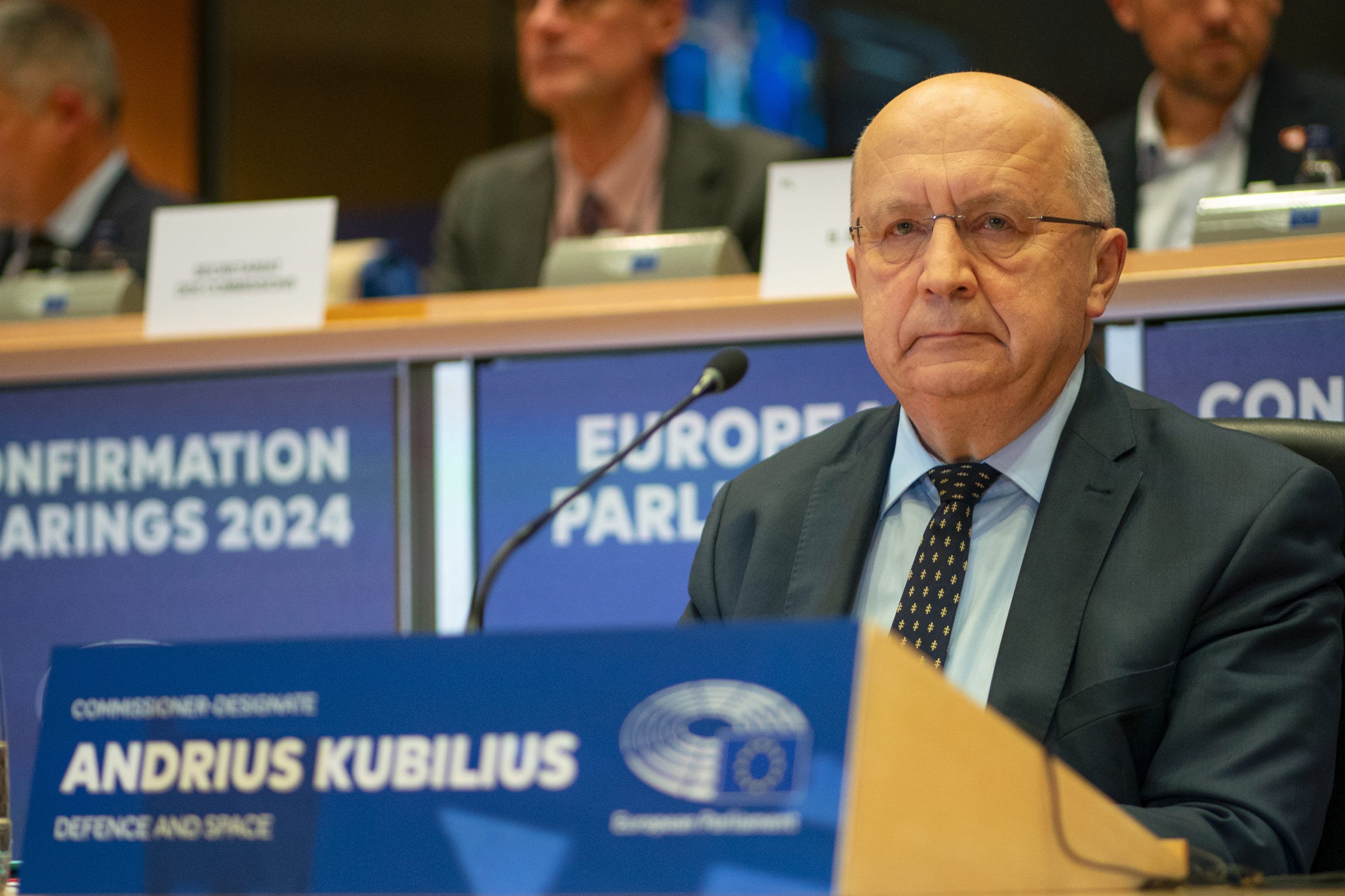
The first task is detection, EU Defence and Space Commissioner Andrius Kubilius told an audience of hundreds yesterday at the Munich Cyber Security Conference. “We would never accept a situation where a hostile aircraft or drone enters our airspace undetected for days”, but this is effectively what is happening in cyberspace.
Moreover, Kubilius said Europe should develop an active response to such incursions. “If we can detect, we need to find a way to react,” he said. “Security requires operational capability, not just rules.”
Dag Baehr, Vice President of Germany’s Federal Intelligence Service, was more explicit. “You can’t solve all threats simply by being resilient; you need to be active in defence,” he told the same event. “Deterrence is about creating uncertainty.”
Attribution and retaliation
There is a growing sense that Europe is too passive in its response to Russian hybrid attacks, partly because of a fear that an attack on Russian territory – even if a proportionate response to a similar attack on Europe – might provoke an escalation. The result is that Russia has been able to conduct hybrid operations with impunity, from attacks on subsea cables to cyberattacks on critical infrastructure to (probably) closing down European airports by flying drones overhead.
Speakers at the MCSC outlined a way forward. First is a more robust system of “attribution”: naming the perpetrator of any given attack and, where possible, the state that is backing them. Louise Marie Hurel, a senior researcher at think tank RUSI, noted that non-Western countries including China, Ethiopia and Azerbaijan have already begun to do this. China, she said, has begun calling out alleged operations by Taiwan and the US directly, rather than allowing private companies to do so.
Beyond naming the perpetrator of a cyberattack, Europe must be prepared to set and enforce red lines that would prompt a response in kind, Baehr said. “There’s no point in having red lines only for your own actions… you’re just tying your own hands.”
Ukraine has already shown the effectiveness of unconventional attacks on Russian infrastructure. From last year’s Operation Spiderweb, in which drones destroyed dozens of Russian jets on the tarmac, to attacks on oil infrastructure and tankers, Ukraine has shown that operations away from the frontlines can have a powerful impact on Russia’s war-fighting ability. They have also notably not caused a nuclear escalation, the irrational fear that deters some Europeans from ‘provoking’ Russia, even when this just means trading a blow for a blow.
Hardened infrastructure
Beyond a retaliatory capability and the willingness to use it, Europe must also harden its infrastructure against all manner of attacks, both to limit the effectiveness of hybrid operations and to avoid a crippling strike in the event of a hot war.
The need to expand military transport infrastructure is already well known. But in a longer war, the loss of civilian infrastructure would be no less devastating. At the most basic level, a civilian who can look after their own family and not take up state capacity in the event of, say, a power outage is a strategic asset – something that Sweden’s ‘total defence’ preparations lean into.
Sweden is now adding a cybersecurity dimension to this concept, said Lisa Gustafsson, a director at the Ministry of Defence. Critical infrastructure must be able to withstand attacks of any kind. “Is total defence credible without cyber resilience? No.”
New technologies offer a variety of ways to strengthen infrastructure. At an event in Brussels on energy resilience earlier this week, organised by Hack Belgium Labs, one speaker suggested that small modular nuclear reactors (SMRs) could be attached to critical infrastructure such as ports to insulate them from attacks on the electrical grid. Large batteries, which have only recently become commercially viable, would provide another layer of resilience.
And if Europe’s new class of hybrid warfare hawks get their way, any such attack would be met by a quick and decisive response in kind.
In the news
Ukraine has opened up arms exports for the first time since the Russian invasion, and on Thursday said that several firms had received licences to sell their goods abroad.
KNDS has rejected the idea of investment from Rheinmetall, the FT reported. The Franco-German company makes the Leopard 2 tank and the Boxer infantry fighting vehicle, among other land-based platforms, weapons systems and ammunition.
The FCAS joint fighter jet project is close to collapse, Politico reported, citing French and German officials. The Economist reached a similar conclusion. That “would not be the end of the world”, German defence minister Boris Pistorius said.
France and Germany have both expressed interest in a proposed new ballistic missile to be built by ArianeGroup, the French rocketry company has said.
Further reading
Germany’s rearmament could provide a boost to its broader economy, albeit not for the next year or so, according to the Economist.
There is still scope for Europe and the US to cooperate on missile defence in Greenland, particularly given the need to counter Russia’s Burevestnik cruise missile, Rafael Loss wrote for the European Council on Foreign Relations.
Increased European aid to Ukraine last year almost offset the collapse in US contributions, Taro Nishikawa and Christoph Trebesch wrote for the Kiel Institut.
European states should develop their nuclear capabilities, begin to substitute American military capabilities in Europe, and be ready to “credibly deter unwanted US interference with costly political and economic measures”, Wannes Verstraete wrote for the Egmont Institute.
Thank you for reading The Sentinel. To receive all of our free news and analysis, subscribe by clicking the button below.
If you’d like to submit an op-ed, or are interested in a full subscription when they become available, please email sam@the-sentinel.eu.