
The Sentinel Weekly: Whisper ‘conscription’
Europe begins to condition citizens for future service

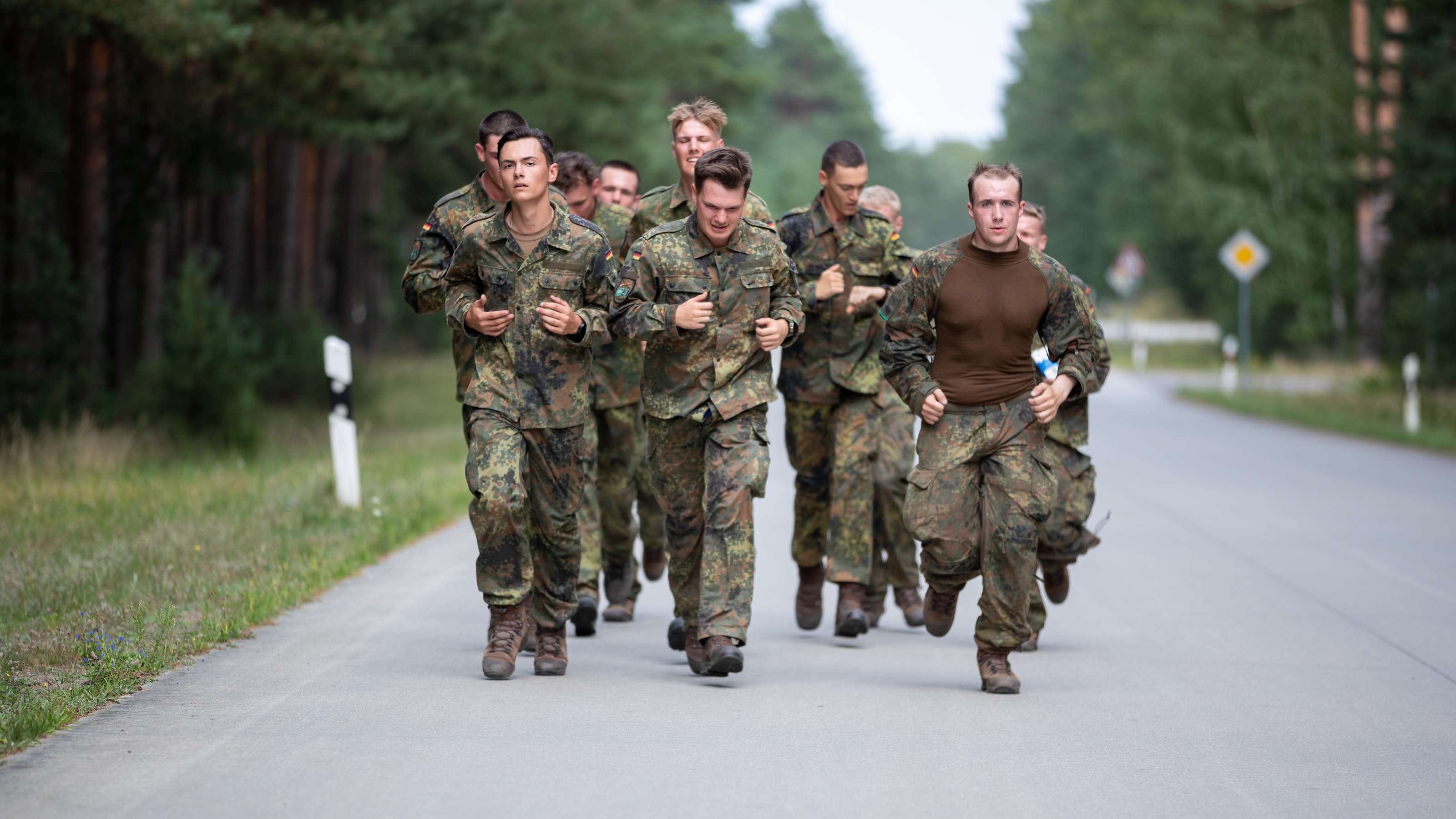
News this week of apparent German restrictions on male citizens’ travel does not mark an imminent return to conscription, but it does show that leaders are starting to think about whether and how military service should be introduced to populations used to peace.
As with most topics related to European defence, each country is doing things its own way.
German media reported over the weekend that men aged between 18 and 45 would need permission from a military careers centre to leave the country for more than three months. The provision, which previously went unnoticed, is in the small print of a new military service law that took effect at the beginning of this year.
Reading beyond the headline, it appears that the law is intended to keep track of men who might be called up in case of emergency, rather than to restrict their movements in the present moment. In practice, the military must grant the permission if “no specific military service is expected during the period in question,” news agency DPA quoted an official as saying.
The public appears to have understood the nuance. A German friend in Brussels reports that the story is not a big topic of conversation among his friends back home, who are subject to the provision.
Still, it’s notable that lawmakers chose to frame the requirement as seeking permission to travel, rather than simply notifying the authorities of one’s movements. That suggests they may be starting to introduce the idea that citizenship brings obligations as well as entitlements – an alien concept to the majority of living Europeans.
The new German rules do not impose military service on anyone, but require male citizens turning 18 to attend a recruitment centre and answer a questionnaire covering their education, health, and willingness to serve. Women may choose to attend and volunteer. The hope is to raise the number of active-duty soldiers to 260,000, from 180,000 now.
The path to more intensive recruitment is clear. By 2035, the German armed forces will have records of every male citizen aged 18 to 27. Some will have completed basic training, and all will at least have seen a military facility and exchanged a few words with a recruiting sergeant. And the authorities will have some idea of who is healthy and likely to respond positively to a voluntary call-up.
Finnish fortitude
Other European countries impose a range of requirements, from compulsory military service to no requirement at all, through a whole spectrum of intermediate measures including targeted recruitment, voluntary service and civic alternatives.
Finland has the most comprehensive system, with a longstanding requirement for all men to complete an initial period of service and then remain in the reserves until age 60, with periods of active service throughout; women can volunteer to do the same.
This means that Finland, with a population of less than 6 million, has only around 24,000 full-time military personnel but can quickly increase this to around 280,000 trained reservists in wartime. In a desperate situation, it can call on up to 900,000 people with at least some history of military service.
Finland’s approach reflects its geography and history, and can’t necessarily be replicated elsewhere. It fought an existential defence against the Soviet Union in 1939-40, eventually ceding territory but inflicting enough damage to ensure its survival as an independent state. Its border with Russia is more than 1,300km long, the longest of any European country bar Ukraine.
Ramping up, slowly
Neighbouring Sweden puts more of a focus on civil defence and resilience, which it frames as an active duty of all citizens. Nevertheless, it has a compulsory questionnaire for citizens turning 18 – similar to the German approach, but treating women the same as men – which it uses to identify the most suitable candidates to invite for service.
Several other European countries including Greece, Austria and Denmark have compulsory service. No two countries are quite the same: some apply equally to men and women while others have stricter requirements for men; some have an alternative option for civic service, while others require all healthy citizens to undergo military training.
Across Europe, requirements are gradually getting more stringent. Denmark extended the draft to women for the first time in 2025, and also lengthened the standard service period from four to 11 months. Earlier this year, Croatia reintroduced compulsory service for men for the first time since 2008.
Nonetheless, training is not the same as going to war. Last November, France’s top general sparked a backlash by saying that the country must be ready to “lose its children” in the event of war with Russia, lamenting that society lacked “the spirit to accept suffering in order to protect who we are”.
Across Europe, polls have shown historically low proportions of young people willing to fight to defend their country. As the continent prepares to deter Russia without America, the first battle is for the spirit of its citizens.
In the news
Fire Point is working with other European companies to develop an interceptor that can destroy ballistic missiles for a unit cost of less than $1 million (€860,000), Reuters reported after interviewing its co-founder Denys Shtilierman.
Russian submarines spend a month in British waters carrying out covert surveillance of undersea cables and pipelines, UK Defence Secretary John Healey said.
NATO’s Allied Air Command is calling on defence companies to develop new technologies to detect airborne threats, UK Defence Journal reported, following drone incursions into Poland last year.
France plans to spend an additional €36 billion on defence between now and 2030, bringing its total budget to around 2.5% of GDP by the end of the decade, Reuters reported. It will build up stocks of strike missiles, air-defence interceptors and artillery shells.
Czechoslovak Group (CSG) has won contracts worth $2.5 billion (€2.1 billion) to deliver air defence systems to countries in Southeast Asia, through its export subsidiary Excalibur International, it said in a statement.
Romania’s Mangalia Shipyard, the country’s only facility capable of building military vessels, has gone bankrupt, newspaper Ziarul Financiar reported.
Wild Hornets, a Ukrainian maker of FPV drones and interceptors, has claimed to have destroyed two Shahed strike drones from a range of more than 500km using new remote control technology, DS News reported.
Further reading
Germany’s F126 frigate project has become “one of Germany’s biggest defence procurement disasters” with officials looking to strip Dutch shipbuilder Damen of its role as lead contractor, the Financial Times wrote.
Russian soldiers are routinely forced to bribe their commanders to get jobs in the rear and avoid being thrown into suicidal assaults – or simply to avoid a beating or worse, the Economist reported.
Plans for a new air-launched ballistic missile could dramatically improve Ukraine’s ability to strike targets deep inside Russia, Wes O’Donnell wrote on his Substack.
The Iran war calls into question both America’s willingness and its production capacity to deliver weapons to Europe, even for orders that have already been placed, Luigi Scazzieri and Giuseppe Spatafora wrote for the EU Institute for Security Studies.
Thank you for reading The Sentinel. To receive all of our free news and analysis, subscribe by clicking the button below.
If you’d like to submit an op-ed, or are interested in a full subscription when they become available, please email sam@thesentinel.eu.