
The Sentinel Weekly: War with Iran
Plus Ukrainian advances, air defence fundraising, nuclear deterrence and more

Sabres are rattling once again in the Middle East. The US has moved an enormous strike force to the Gulf and is demanding that Iran bend the knee. Iran is defiant. With no apparent progress at talks in Geneva this week, the risk of war is at its highest since the hostage crisis of 1980.
European leaders have wisely stayed out of it and Donald Trump, unlike previous American adventurers in the Middle East, seems unconcerned about building a coalition to bolster his diplomatic credibility. But while Europe won’t be directly implicated in any conflict, it could alter the course of the war in Ukraine and the broader strategic picture for Europe.
Trump, previously an isolationist, has become more willing to use force. Of the two recent threats he has made, against Venezuela and Greenland, he has executed one and abandoned (for now) the other. The Iran situation looks more like Venezuela, with its large military build-up and longstanding enmity, than like Greenland, which horrified many in the Republican establishment.
The emerging Trump doctrine also seems unconcerned with nation-building, which characterised previous American engagements and was arguably the reason for failure in Iraq and Afghanistan. The operation to remove Nicolás Maduro was clean and successful on its own terms, and Trump may wish to repeat the trick in Tehran.
The hardware being moved to the Middle East also supports this view. The US is ready to suppress Iran’s air defences conduct a prolonged bombing campaign along several axes of attack, possibly with special forces operations, but not to mount a land invasion.
Risk of escalation
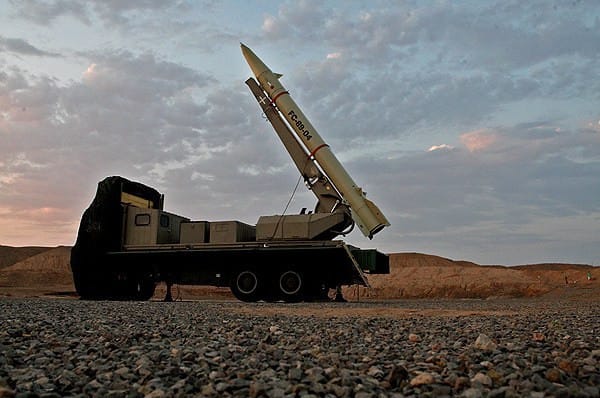
The risk is that Iran might withstand the bombing and then unleash so much havoc in the region, and so much damage to Trump’s pride, that America is forced to escalate. Iran’s arsenal of ballistic missiles and Shahed drones could target American bases, Israel, US allies in the Gulf, and globally systemic oil infrastructure.
Iran’s regime would not survive a total war, at least not in its present form. Its best outcome is a negotiated deal that it can claim as a victory at home, as reflected in its diplomatic stance until now. “We are ready for negotiation, but not for dictation,” foreign minister Abbas Araghchi said back in November.
Anything that looks like a surrender to America is more difficult, verging on constitutionally impossible for Iran. If Trump pushes too hard, the regime’s choice will be between death and dishonour. Many would choose to die on their feet.
Post-revolutionary Iran is a unique construction. It contains elements of an Islamist theocracy, represented by the clerical hierarchy; a military-industrial junta (the IRGC); and even a representative democracy (liberals are excluded but moderate reformists can sometimes exert influence as president). All of these structures overlap and often compete.
One of the few things that unites these power bases is a narrative of ‘resistance’ to American imperialism, an idea that predates the Islamic Revolution. That will make it very difficult for the elite to swallow anything that looks like capitulation, and anyone who suggests it is liable to be purged.
Another problem from the Iranian side is a deep lack of trust in the US. Trump in his first term ‘withdrew from’ (Iranians might say ‘violated’) the JCPOA nuclear deal, which Iranian moderates had fought hard for internally. The US has invaded two of Iran’s neighbours in this century. If the regime gives up the threat of a nuclear deterrent, as Trump now insists, what guarantee will it have against future aggression?
It is tempting to think, given recent protests in Iran, that an American campaign would quickly topple the hated regime and bring about something better. But in light of Iran’s complex society and fraught history with the US, a prolonged period of instability is more likely. That is what’s at stake if the two sides can’t find a mutually agreeable way to climb down in the coming days and weeks.
Europe alone
A prolonged American engagement in the Middle East would leave it with even less intent and capability to be active in Europe, particularly if rivals elsewhere see an opportunity to strike – factions rising up in Venezuela, or China making a move on Taiwan or some island in the South China Sea.
Europe would have to entirely take over support for Ukraine, which would require a rapid improvement in surveillance and intelligence as well as an uptick in deliveries of weapons, ammunition, and ballistic missiles.
Russia could be affected by a slowdown in weapons shipments from Iran, but the effect would be mild: Iran’s most notable contribution has been the Shahed drone, which Russia is now able to produce itself. The lost benefits to Russia are likely to be limited to occasional drone and missile shipments and small numbers of trafficked soldiers.
That in turn could make Vladimir Putin more likely to open up a second front, counting on a direct threat to bring Ukraine’s European backers to the negotiating table and trusting that the US, bogged down in Iran, would have no appetite to get involved.
The time for Europe to rearm is already tight. A new war in the Middle East could further speed up the clock.
In the news
Ukraine liberated hundreds of square kilometres in the days leading up to the fourth anniversary of the Russian invasion.
Emmanuel Macron is preparing to make an announcement on France’s nuclear doctrine next Monday.
Belgium will reinforce the port of Antwerp, Europe’s second-largest, with anti-air and anti-drone defences by next year.
Rheinmetall is likely to win a contract worth hundreds of millions of euros to supply drones to Germany’s armed forces, joining local startups Helsing and Stark, the FT reported.
NATO’s tech accelerator is struggling to appoint a permanent managing director, Sifted reported.
Two European air defence startups, Estonia’s Frankenburg Technologies and Munich-based Tytan Technologies, have each raised €30 million.
Rheinmetall is focusing on a fast-firing 7.62mm minigun for light drone defence, favouring a kinetic weapon over other options such as lasers or jamming, Defense Express reported.
Further reading
It’s not clear how European countries will meet their military spending targets given limited fiscal headroom, and they may have to mandate military service to meet manpower requirements, according to the IISS’s annual report.
Russia is developing air defence systems that could defeat the British and French nuclear deterrents, Sidharth Kaushal wrote for RUSI.
Russia can be deterred but, four years into the war, Europeans must lose the illusion that a fair peace in Ukraine is just around the corner, Ian Bond wrote for the Centre for European Reform.
Bilateral or small multilateral defence clusters are more realistic in the immediate term than full European integration, Luigi Scazzieri wrote for the EU Institute for Security Studies.
The West is on “a collision course with a Russia that is on a war footing”, General Roly Walker, the head of the UK Army, wrote in an op-ed for the Daily Mail.
European leaders are split on whether to achieve industrial sovereignty through economic integration or deregulation, Grégoire Roos wrote for Chatham House.
A credible European security guarantee to Ukraine after any cease fire is the only way to guarantee against a resumption and possibly broadening of the conflict, Sven Biscop wrote for the Egmont Institute.
Thank you for reading The Sentinel. To receive all of our free news and analysis, subscribe by clicking the button below.
If you’d like to submit an op-ed, or are interested in a full subscription when they become available, please email sam@the-sentinel.eu.