
The Sentinel Weekly: Ukraine’s route to market
Plus Spanish merger collapse, FCAS’s last chance, EU-GCC relations and more

As Europe rushes to build an independent military capability, forging a deeper industrial partnership with Ukraine is high on the agenda. Ukraine’s wartime economy is in many ways ahead of the EU’s, with the cruel logic of necessity powering fast innovation cycles and production at scale.
But those same wartime dynamics also create obstacles to closer integration: The blurred line between military and civilian life in Ukraine can’t be replicated in countries that aren’t at war, while Ukrainian companies’ operational secrecy can make it hard for them to find partners in Europe.
Plugging Ukrainian innovation into EU supply chains could create commercial opportunities as well as strategic resilience. The Iran war has created huge global demand for cheap interceptors, a technology at which Ukraine excels. Moreover, much of this demand comes from the GCC countries that may, as Michael Stephens wrote for RUSI this week, seek to diversify their foreign relations given the harm that America’s war has brought down upon them.
Europe’s need to replace American capabilities has also become more urgent as a result of events in the Gulf. Vladimir Putin’s war chest is replenished thanks to the surge in oil and gas prices; and Donald Trump, who fails to grasp the difference between a treaty obligation and a war of choice, is more likely to shirk the defence of a European NATO ally after they unanimously declined to commit forces to the Gulf.
Drone leadership
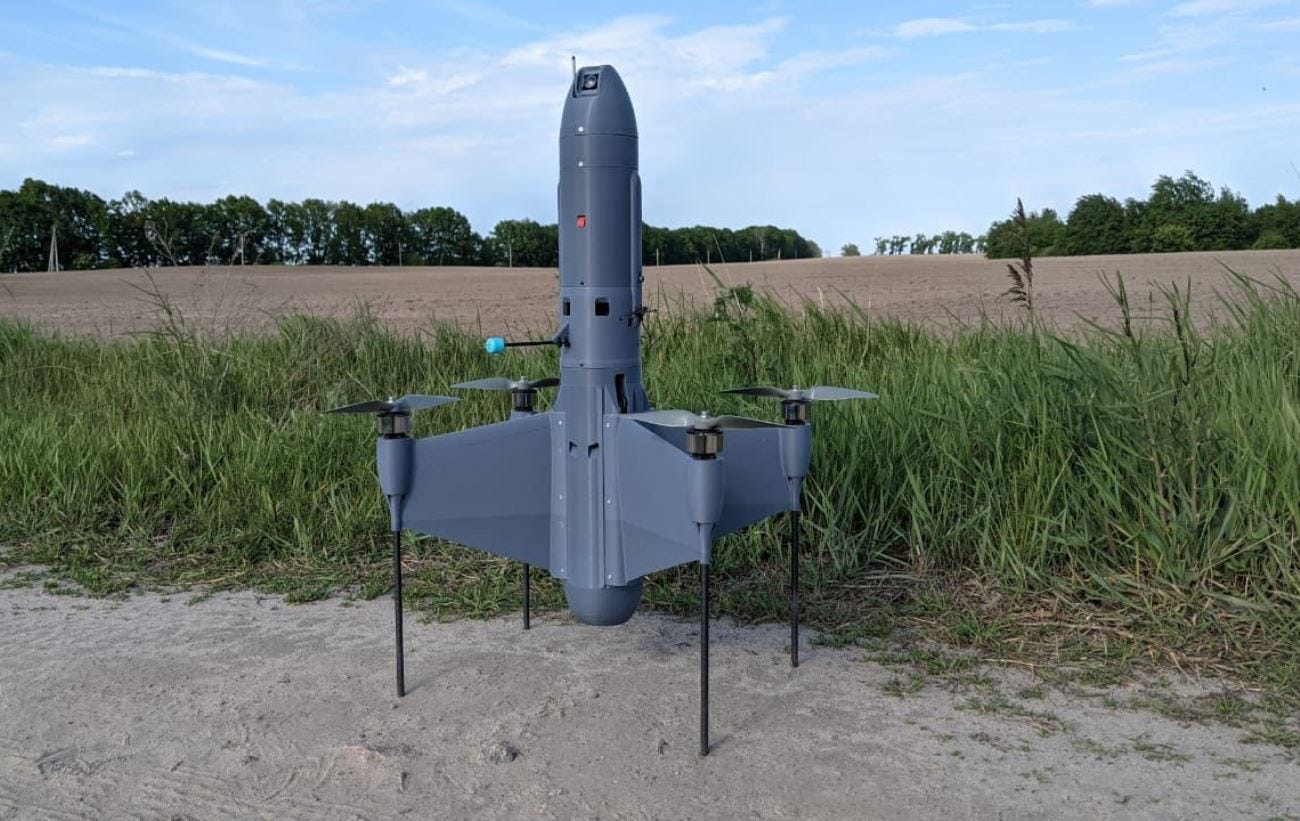
Ukraine’s technological lead is greatest in drones of all kinds, from naval drones to air defence interceptors to strike drones of various ranges. It has scaled production so rapidly that it may soon be able to sell various models without undercutting its own needs, or simply licence further production in the EU market.
“Ukraine’s wartime drone innovation is remarkable,” said Raluca Csernatoni, a research fellow at Carnegie Europe, at an event this week organised by France’s Institute for Strategic Research (IRSEM). She noted that Ukraine produced around 3.5 million drones last year – more than 10,000 a day – and that number could increase to 7 million this year.
It has also developed command and control (C2) systems that integrate this new technology and respond to novel threats being deployed in the high-intensity war. Other European countries’ C2 systems “are not adapted to this level of threat”, Elisa Royer, a defence policy advisor at the European External Action Service, told the same event.
The European Commission is eager to close the gap, the better to help Ukraine but also to shore up the EU’s own defences. Its Action Plan on Drone and Counter Drone Security, published last month, foresees a ‘Drone Alliance’ with Ukraine to develop a joint industrial ecosystem, and groups Ukraine alongside EU member states in its call to develop drone detection capabilities.
When it comes to drone production, “Ukraine is considered a quasi-member state … this is the political guidance,” Royer said. The aspiration is that “when someone buys Ukrainian, they buy European”.
Hurdles to integration
Nevertheless, it’s not always straightforward for Ukrainian companies to expand into EU countries, form partnerships there, or participate in EU projects.
Most drone manufacturers are first and foremost small businesses, with limited budgets and administrative capacity. That puts some EU and NATO projects, which require a presence in a member state, out of reach: Hiring someone to open an overseas office or hack through EU bureaucracy means one less engineer on the payroll.
Another issue is the low profile kept by many Ukrainian companies for reasons of operational security. A senior European officer who recently visited Ukraine told The Sentinel he had met companies producing large quantities for drones that effectively “don’t exist”, so low is their public profile.
Corporate governances rules in the EU would prevent any completely invisible company from operating there. But even in less extreme cases, Ukrainian companies that have a registered address and identifiable directors may still struggle to form partnerships elsewhere in Europe if their profile is too low to build familiarity and trust.
“The more visibility you have, the more people trust you,” said Julia Petryk, CEO and co-founder of Calibrated, a communications agency that works for Ukrainian defence companies. “Companies are thinking about controlled visibility,” trying to make themselves known to potential partners without presenting a target to Russia.
Some people in the EU may resist Ukrainian integration for a simpler reason: The market entry of more agile players could upset existing ways of doing business and harm entrenched interests, just as the fear of cheap grain production led many in the EU’s farming sector to resist Ukrainian accession.
Ukraine’s drone industry has brought its innovation cycle down to about four months, noted Liuka Lobaryeva, another co-founder at Calibrated. “This is something Europe is not ready for.”
In the news
The planned sale of EM&E to Indra has collapsed after Indra’s state investor SEPI raised objections due to overlaps in their ownership and leadership structures. Ángel Escribano, who co-owns EM&E, had refused SEPI’s demand that he step down as president of Indra, El País reported.
European countries have unanimously refused US President Donald Trump’s request to send warships to the Gulf. “Washington did not consult us,” German Chancellor Friedrich Merz said. “We would have advised against it.”
France and Germany will make a final attempt to mediate between Airbus and Dassault to secure the future of the FCAS joint fighter jet project, President Emmanuel Macron said on Thursday at an EU summit. A German official said a deal must be reached by mid-April to avoid complicating budget decisions.
The UK, Finland and the Netherlands plan to create a mechanism for joint financing and procurement of military equipment. “By joining forces, we get more security with the same resources and we strengthen our alliances as well,” Dutch Finance Minister Eelco Heinen said.
Danish soldiers made preparations to resist a US invasion of Greenland in January, flying out bags of blood and explosives to blow up runways, public broadcaster DR reported this week.
Poland is interested in joining the GCAP joint fighter jet program alongside the UK, Italy and Japan, a minister told state broadcaster TVP. The UK indicated that it was open to expanding the consortium, UK Defence Journal reported.
Further reading
Gulf Arab countries “will be re-evaluating their future following the US’ betrayal of its security guarantees”, Michael Stephens wrote for RUSI, suggesting an opportunity for the UK, France and other European countries to step up defence partnerships.
European assistance to GCC countries could ultimately help Ukraine’s war effort due to ties between Russia and Iran, and to the shared need for the counter-drone technology at which Ukraine excels, Nikola Zukalová wrote for the Wilfried Martens Centre.
European Commission President Ursula von der Leyen overstepped her role by holding direct talks with GCC leaders and taking a public stance on the Iran war that “did not reflect any European consensus”, Claude-France Arnould wrote for the Brussels Institute for Geopolitics.
The EU should define its grand strategy in a ‘European Security Strategy’ document, as it last did in 2003, Sven Biscop wrote for the Egmont Institute. EU strategy “should at least involve the UK, which is pivotal”, he wrote.
Donald Trump’s panicked response to Iranian strikes on GCC energy infrastructure suggests that Iran has achieved “escalation dominance”, allowing it to dictate the pace of the war, Mark Urban wrote on his Substack.
Thank you for reading The Sentinel. To receive all of our free news and analysis, subscribe by clicking the button below.
If you’d like to submit an op-ed, or are interested in a full subscription when they become available, please email sam@the-sentinel.eu.
https://thebluearmchair.substack.com/p/a-correction?r=5kmhkr
#ww3