
The Sentinel Weekly: Money for nothing
Europe pays America for weapons it doesn’t receive

The wars in Ukraine and Iran are impacting US arms deliveries elsewhere and alerting European buyers to an uncomfortable fact: In the event of a contractual dispute, they have no recourse.
Defence industries around the world have a peculiar legal framework because of national security provisions, an effect exacerbated when dealing with a superpower. In past decades, the risks to European buyers have been largely theoretical and judged to be a worthwhile trade-off to access cutting-edge weaponry. That may be starting to change.
Last week, Reuters reported that US officials had told European customers that contracted weapons deliveries under the Foreign Military Sales (FMS) program would be delayed, including to frontline states in the Nordics and Baltics, as shipments were directed to US forces fighting in the Gulf.
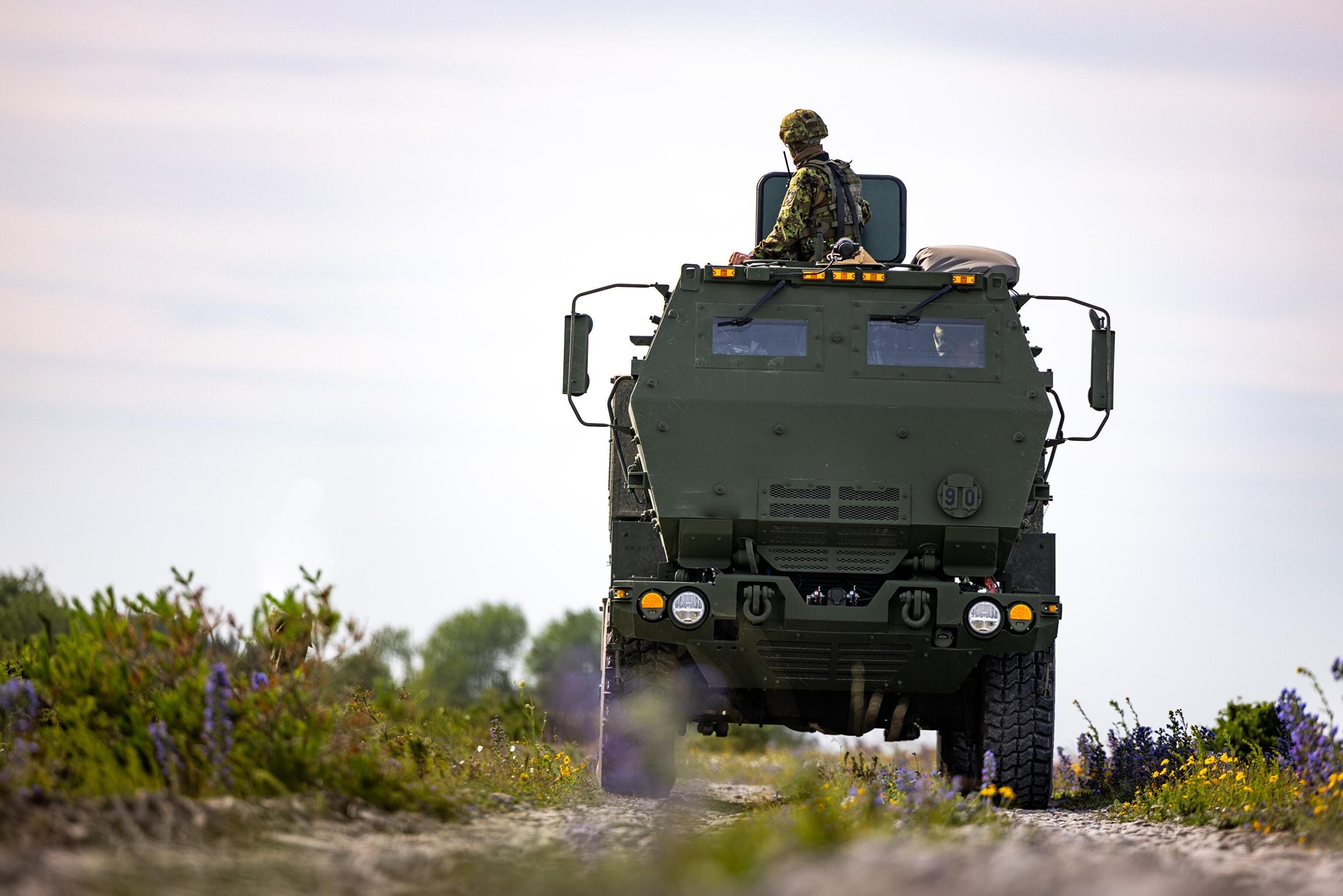
Estonia’s Defence Minister Hanno Pevkur said this week that US ammunition shipments for the HIMARS multi-launch rocket system were “on hold” with apparently no indication of when they might resume. “We will try to gather as much information as possible,” he said.
Compounding the problem, the US places tight restrictions on how its equipment can be used. “In the case of HIMARS, it is theoretically possible to use ammunition from other manufacturers, but that would again require permission from Lockheed Martin and the US government,” Pevkur said according to news site ERR.
No recourse
Now that shipments are coming under pressure, European buyers are starting to realise they have very little recourse against US suppliers that fail to meet their obligations, and are at risk of losing their money or having other orders halted if they try to exercise their rights.
It’s a sharp reminder of the imbalance of power in the trans-Atlantic relationship.
Last autumn, Swiss officials learned that deliveries of Patriot air defence systems would be delayed by several years due to competing demand in Ukraine, and paused payments. In response, the US simply redirected Swiss payments for F-35 jets into the Patriot budget, broadcaster SRF reported last month – something it can easily do under the FMS program.
This structure, peculiar to the defence sector, in effect puts the combined market power of the US arms industry behind each individual contract, leaving buyers outmatched in any contractual dispute.
“Well over CHF100 million” (€109 million) was redirected from the F-35 to the Patriot budget, SRF reported. It interviewed a senior procurement official, Urs Loher, who “told SRF how much money has already been shifted. But under pressure from US authorities, he can no longer disclose the exact figure.”
The reallocation of funds “is very unsatisfactory”, SRF quoted Loher as saying. It also reported that the US had raised the total price of the Patriot contract by 50% since signing it, to about 3 billion francs.
A bird in the hand
The current supply squeeze and the longer-term Atlantic divergence are starting to have an effect on European decision-making.
“It’s frustrating when we impose a payment freeze and the money is simply redirected,” SRF quoted Werner Salzmann, a senator from the right-wing Swiss People’s Party, as saying. “We need to think carefully about whether we want to keep signing such agreements.”
In Estonia, a former top general said that a delay of more than three years for the HIMARS ammunition should prompt a rethink. “If it goes beyond that, then alternatives should be examined,” ERR quoted Martin Herem as saying. “Fortunately, Estonia has signed a contract with Korea’s Hanwha Aerospace, which could provide either relief to this problem or even a replacement.”
And Denmark this week signed a contract for the SAMP/T NG air defence system, a rival to the Patriot made by Thales and MBDA. Prime Minister Mette Frederiksen had earlier this year announced a preference for good equipment that arrives quickly over excellent systems that might not: “If we can’t get the best equipment, buy the next best”. The order, announced last September, marks the first sale of the Franco-Italian system outside its home countries.
Permission to engage
Restrictions on how equipment can be used are also becoming more problematic for European buyers. Even without President Donald Trump’s threats to take Greenland by force, events have shown the problem of European states not having full sovereign control of their arsenal.
After Russia’s invasion of Ukraine, the US blocked the Netherlands and Denmark from donating their F-16s for several crucial months. Two years later, it continued to restrict the use of certain British and French missiles because they contain some American components. Buying American weapons does not mean owning them.
The risk is clear. If Vladimir Putin attacks NATO territory, the US may fail to intervene, which would be harmful enough. But the US is also within its rights to stop its weapons being used to fight back – assuming they’ve been delivered at all.
European leaders need to think about that scenario, and how much they’re willing to pay to avoid it.
In the news
Mediators have failed to break the deadlock between Dassault and Airbus over the future of FCAS. Germany’s Boris Pistorius wants a decision “this week” as Friedrich Merz and Emmanuel Macron meet.
Polish Prime Minister Donald Tusk has cast doubt on whether NATO’s Article 5 would be respected, and urged the EU to work towards a common defence policy, in an interview with the FT.
Airbus and Thales are working with Poland’s Radmor to build a dedicated satellite for the Polish armed forces.
Korea’s Hanwha is setting up a new entity in Germany to produce ammunition, air defence, artillery and strike weapons.
Rheinmetall has received a German order for drones worth an initial €300 million, under a framework potentially worth billions.
Further reading
Europe must implement a security architecture that works with a reduced or absent US role, Justin Logan and Rachel Tausendfreund wrote for the German Council on Foreign Relations.
For Europe to manage its own defence “will require fundamentally different planning, coordinated investments, and a shared framework for collective deterrence and defence”, according to Claudia Major from the German Marshall Fund of the United States.
Thank you for reading The Sentinel. To receive all of our free news and analysis, subscribe by clicking the button below.
If you’d like to submit an op-ed, or are interested in a full subscription when they become available, please email sam@thesentinel.eu.