
The Sentinel Weekly: Go bespoke, go broke
Europe’s bigger countries are buying weapons as if they’re still great powers

Momentum is building across Europe to integrate the continent’s fragmented defence industries. EU funding is in place, national budgets are growing and defence giants are making splashy acquisitions.
But behind the scenes, the people trying to implement this grand ambition are running into a thicket of procurement hurdles and national preferences.
A panel discussion last Friday, co-hosted by The Sentinel and consultancy Teneo, highlighted the gap between aspiration and reality. Despite EU incentives for industrial integration and encouraging words from national governments, the speakers described how European defence spending is still getting stuck in silos, chilling competitiveness and putting a ceiling on industrial growth.
The case for consolidating Europe’s defence industries is clear. Joint procurement would give a bigger demand signal to the market, allowing companies to invest more efficiently in research and development – potentially helping them to win export orders outside Europe, too. Allied armies would be more interoperable. And sharper competition would ensure European buyers got the best possible equipment for the right price.
But among Europe’s bigger countries at least, most big contracts are still given to domestic companies. The defence sector has carve-outs from competition law, meaning there’s less need for fair and transparent procurement processes; and design requirements are often so complex, and so peculiar to each country, that outsiders can’t penetrate them.
As a result, a huge chunk of European defence spending goes on parallel R&D processes, and relatively little on production. Worse, since no country’s defence industry has continental scale, several high-end capabilities simply don’t exist and have to be outsourced to the US. By refusing to depend on each other, Europeans have created a bigger dependency on an outside power.
Artisanal production
Part of the issue is that each European country has its own military doctrine, which in turn requires different equipment specifications. While defence companies often create specific variants for export customers, Europe’s bigger countries can be so demanding that a bespoke product is required – without placing big enough orders to justify the initial R&D outlay.
Take the UK’s Ajax armoured vehicle, whose survival was confirmed this week by the Ministry of Defence. As journalist and former tank commander Mark Urban writes on his Substack, the Army imposed 1,318 specifications on the procurement, a burden so onerous that “the producer of a rival vehicle this week said they were glad they didn’t get the contract”.
All of this for an initial order of fewer than 600 vehicles – less than half a unit per design specification. It’s little wonder that Britain has so far sunk £6 billion (€7 billion) into the platform before it has even passed field testing. Short of a big export order coming in (unlikely given Ajax’s history of failed field tests), that’s more than £10 million per unit in development costs alone.
By contrast, the US has produced nearly 7,000 units of its closest Ajax equivalent, the Bradley infantry fighting vehicle, since 1981. That’s an economy of scale more than ten times better than the UK’s, and the only way the UK can match it is by combining forces with its neighbours.
If Britain were a global power and Ajax a unique capability, the outlay might be justifiable. In fact, other European countries make very good infantry fighting vehicles with similar specifications – Germany’s Puma or Sweden’s CV-90, for example – that could fulfil the role if the Army were a little more flexible.
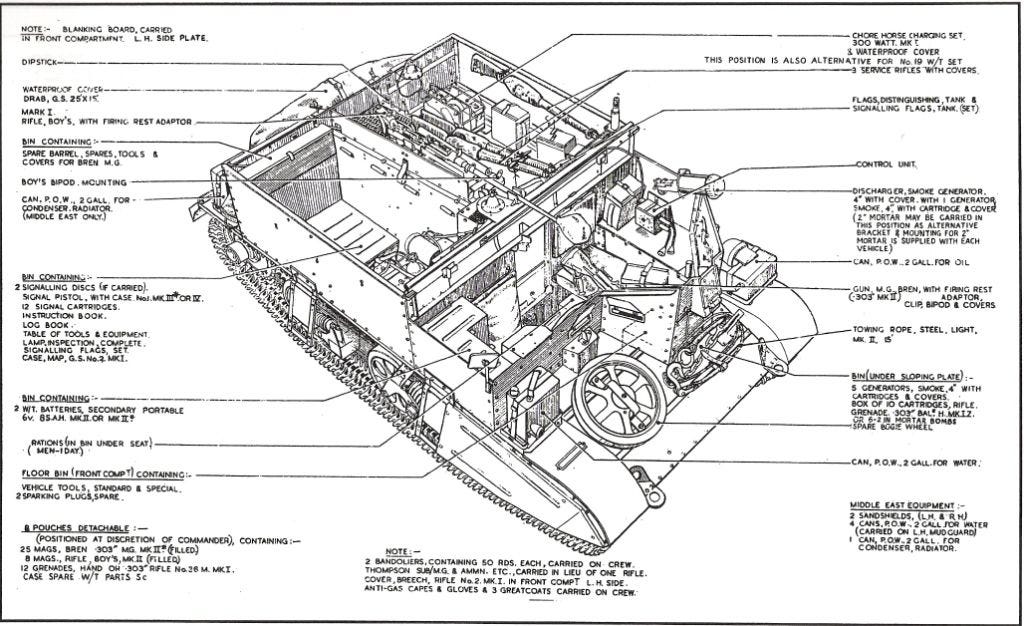
Part of the problem is that Britain has a small Army that used to be a big one, and that now lives beyond its means. During the Second World War it ordered more than 100,000 units of the Universal Carrier, a tracked and armoured troop transporter. At that scale, bespoke procurement makes sense.
A weakness for the personal shopping experience is not unique to Britain. As the Financial Times reported earlier this month, the German Navy placed more than 7,000 specifications on the design of its F126 frigate, then ordered just four of them (plus two more later). The project is now €2 billion in the hole and the lead contractor, Damen, is leaving acrimoniously. As with Ajax, perfectly viable alternatives exist on the European market.
When European countries do agree to joint procurement, it normally comes with a side order of joint production, resulting in unwieldy consortia that are often marred with culture clashes, disagreements over design specs and fights for control. The FCAS joint fighter jet is providing an example of that in real time.
In a rational Europe with a functioning single market, countries would collaborate on procurement specifications and then buy, at scale, whichever product was best. Perhaps Britain would buy German armoured vehicles and Germany would buy British frigates. At that point, Europe’s defence market would start to look a lot like America’s, and could transform defence spending into fighting power at a similar rate. But both culturally and politically, there is a long way to go.
EU incentives
The EU is trying to nudge its member states to behave more like this through a range of funding mechanisms that encourage joint R&D and production. This may achieve some success with newer technologies, where national procurement patterns are not yet baked in.
But EU officials are clear-eyed about what they can and can’t do. As Sanna Laaksonen, a member of Vice President Henna Virkkunen’s cabinet, said at The Sentinel’s event last week, the European Commission can provide incentives but it can’t tell member states how to conduct military procurement.
National sovereignty in defence is ironclad in the EU treaties. Article 346 of the Treaty on the Functioning of the European Union (TFEU) provides a sweeping exemption from EU competition rules for military procurement: “any Member State may take such measures as it considers necessary for the protection of the essential interests of its security which are connected with the production of or trade in arms, munitions and war material”.
Whether through EU treaty change or some form of multilateral agreement, the decision to create a European market for defence will have to be made by national governments. They’ll need to overcome institutional resistance at home and at the same time persuade each other to act in lockstep, since lowering trade barriers unilaterally is rarely a profitable move.
As countries rush to increase their defence spending, early indications are that they’re following established patterns. In the last two weeks alone, Rheinmetall has announced a €1 billion German order for infantry equipment and another €300 million contract for drones. Almost all of Germany’s recent spending splurge has gone to domestic companies.
Europe’s military weakness does not come from lack of funds. NATO’s European members jointly spent more than China in 2025, and more than half of what the US spent. Fragmentation is what has stopped them turning that budget into fighting power – and that will be true no matter what percentage of GDP they spend.
In the news
China has placed export controls on seven European defence companies over alleged arms sales to Taiwan, preventing them from buying dual-use goods, Chinese newspaper Global Times reported.
The European Commission will draft guidelines on how the EU should act if its mutual defence clause is activated, the president of Cyprus has said.
Rheinmetall has received an order worth €1.04 billion from the Bundeswehr to provide additional units of its Infantry Soldier of the Future – Enhanced System (IdZ-ES).
Drone manufacturers in Spain, mostly SMEs, have come together to form a new industry association called Ecuas in response to disappointing growth that they blame on regulatory barriers, El País reported.
The UK is assembling a coalition of Northern European navies to form a joint maritime force that will use common platforms and systems, as well as shared digital and logistics systems, according to UK Defence Journal.
Further reading
The EU should take advantage of its post-Orbán consensus to lock in a majority voting system for foreign policy and security decisions, to prevent future obstructionists from abusing their veto power, Francesco Nicoli, Roel Beetsma and Guntram B. Wolff wrote for Bruegel.
Germany’s push to develop the biggest conventional armed forces in Europe is dividing its society as well as its neighbours, notably France and Poland, Anne-Sylvaine Chassany and Leila Abboud wrote for the Financial Times.
The fast and massive increase in European defence budgets “will reinforce the temptation of purely national development and acquisition,” Claude-France Arnould and Luuk van Middelaar wrote for the Brussels Institute for Geopolitics, calling for stronger European political leadership.
This edition of The Sentinel is early because tomorrow is a public holiday in Brussels. Normal service will resume next week.
The Sentinel is a few weeks away from launch, when we will move on to our own platform and greatly expand our output. We’ll continue to make some content available for free, which subscribers here will continue to receive.
If you’d like to submit an op-ed, or are interested in a full subscription when they become available, please email sam@thesentinel.eu.