
The Sentinel Weekly: Derisking from America
Plus EU integration, Starlink, procurement strategy and more

Something new happened in Munich last weekend. It wasn’t Marco Rubio’s conciliatory speech; blowing hot and cold is standard procedure for the Trump administration, and not only towards Europe. But this time the response was different.
Previously, European leaders would clutch at any softening from Washington to deny the strategic shift and delay the painful divorce. As Phillips O’Brien wrote last year, the good cop routine “lulled [European states] into thinking the US was still there to help, that they were not faced by an existential threat, and could wait before taking drastic action”.
This time, though, Europeans weren’t buying it. Ignore the reports of the standing ovation and the formules de politesse trotted out by conference organiser Wolfgang Ischinger and European Commission President Ursula von der Leyen. Behind the diplomatic niceties, European resolve has not melted away.
Von der Leyen said the EU must make credible the mutual defence clause in its treaties, effectively creating a backstop to NATO’s Article 5. Friedrich Merz and Emmanuel Macron hinted at the development of a shared European nuclear deterrent. EU foreign policy chief Kaja Kallas took aim at the “fashionable euro-bashing” coming out of America. These are not the words of mollified satraps.
The spell has been broken. As Daniel Drezner wrote: “actions speak louder than words. Nothing that Rubio said erases the dovish U.S. posture towards Russia, Trump’s appetite to colonize Greenland, or various U.S. efforts to weaponize European dependence.”
In Brussels and beyond, conversations have turned to how Europe can “derisk” from the US – the same term used for the relationship with China. For China, this stance is an upgrade from the more severe “decoupling” that would impose blanket bans on certain trades; for the US, it’s a downgrade from the Atlantic alliance. In both cases, it means keeping lines of trade open without creating dangerous dependencies on a country whose interests may or may not align with Europe’s.
Jailbreaking jets
American businesses are trying to limit the damage. Last summer, European NATO members’ pledge to raise defence spending looked like a boon: Following the pattern of previous decades, the lion’s share would flow into the US military-industrial economy. Now they risk not being invited to the dance, and are looking for ways to reassure European buyers that they are reliable partners.
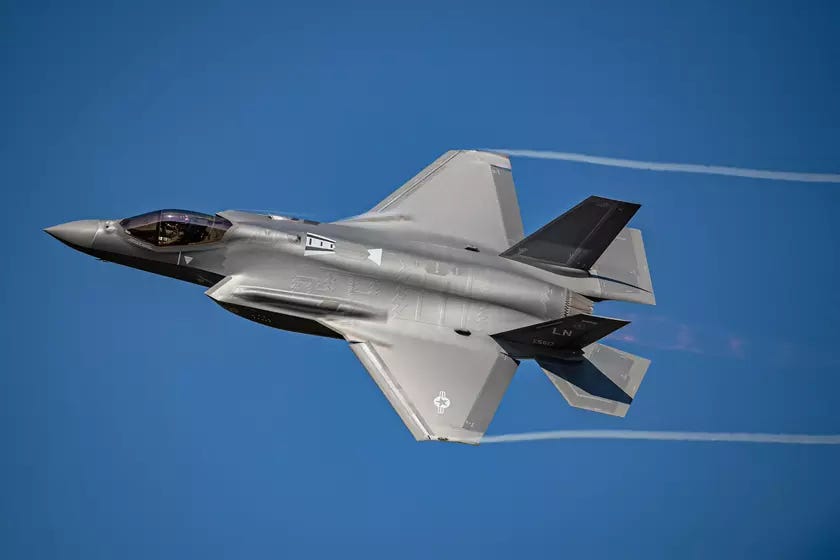
In the secretive world of defence manufacturing, a breakdown in trust can quickly spiral out of control. Senior Americans I have spoken to in the last week are exasperated at the narrative around ‘kill switches’ being built into US kit so that the American government could, say, stop Dutch F-35s from taking off. They insisted there was no such capability and that any restrictions were contractual rather than technical.
It’s true that there’s no evidence of kill switches, but nor can their existence be disproven. For many European leaders that’s an unacceptable strategic vulnerability now that the trust is broken. In a radio interview this week, Dutch defence minister Gijs Tuinman even spoke about developing a capability to “jailbreak” the country’s F-35s, forcibly removing any digital blocks placed on them by the US.
Beyond this extreme scenario, the contractual terms governing advanced US kit often require it to run US software and be maintained by American contractors, baking in a certain degree of dependency that, by extension, carries the threat of being cut off from support. They also often prohibit certain uses of the equipment without American permission.
If a European country were to use its American-made fighter jets to strike Russia, for example, this might breach the terms of the contract. Even if there’s no kill switch, the US could cut off technical maintenance and software support for the platform, which would progressively render it combat ineffective over a period of months or years – much less than its expected lifecycle.
Military mercantilism
Atlanticists also point out, again correctly, that trade flows both ways and that many American-made systems are products of extensive trans-Atlantic cooperation. The F-35, for example, contains many components from the UK and Belgium.
Privately, though, they admit that this stops well short of dependency. The US has, or can quickly create, a domestic capability to replicate the British and Belgian parts. This would be likely to cost more, so it’s not in America’s interest for the relationship to break down. But the consequences are unequal: For the US it’s a bigger bill, but for Europe it’s the total loss of a capability. European components in US-owned supply chains don’t, therefore, do much to erode America’s coercive power.
Ironically enough, the structure of these supply chains mirrors the mercantilist systems put in place by European empires in centuries past. Manchester’s textile industry created demand for cotton that Egypt or India could service – but also delayed their industrialisation. Since many places could produce cotton, but only a few could economically process it into higher-value goods, the dependencies it created flowed only in one direction. The same dynamic applies between completed military systems and their components.
A rising tide lifts many boats, and European countries were for a long time happy with their place in US military supply chains – particularly since they fed into the US security umbrella that underwrote the global order. Now US defence companies face the prospect of European partners pulling out from that trade.
Last summer, as the NATO spending pledges were made, the American defence industry could be forgiven for thinking that Donald Trump was about to double the size of their market in Europe. As time goes by, he looks ever more like the president who killed the golden goose.
In the news
The EU’s six biggest economies have proposed to form a “temporary” inner circle to pursue greater European integration, with a particular focus on defence and promoting the euro currency internationally.
German drone startup Stark has been valued at more than €1 billion in a new funding round. Stark and rival Helsing have both recently won large contracts from the German government.
Russian mercenary company Wagner Group is being hired by the Kremlin to carry out sabotage attacks in Europe, according to Western intelligence sources cited by the FT.
Russian frontline communications have been severely degraded since Elon Musk cut their access to his Starlink satellites.
Italy’s Leonardo and Spain’s Indra this week agreed to cooperate on providing cyber defence to critical infrastructure.
Further reading
European defence procurement should be centralised without becoming overly rigid or top-down to achieve the best results, Rodrigo Carril wrote in a paper for the Kiel Institute. It must also take account of demand surges in the event of war.
Europe should already begin designing and funding Ukraine’s reconstruction, including institutional reform, in order to secure a prosperous and reliable ally once Russia’s war is over, analysts at CEPA wrote in a research note.
Sweden’s favourable regulatory environment has allowed it to create a disproportionate share of Europe’s tech unicorns, Luis Garicano and Per Stromberg wrote on Substack, in an analysis that can equally be applied to defence startups.
The Economist’s Charlemagne columnist has written about France having the right strategic policy but being too annoying to lead it – in stronger terms than The Sentinel dared to!
Thank you for reading The Sentinel. To receive all of our free news and analysis, subscribe by clicking the button below.
If you’d like to submit an op-ed, or are interested in a full subscription when they become available, please email sam@the-sentinel.eu.